Organism 1: Clostradium Tetani(Pathogenic)
Taxonomy
Domain: Bacteria
Phylum: Firmicutes
Genus: Clostridium
Species: C. tetani
Why does it belong in this domain?
It belongs in the domain Bacteria because it is unicellular, prokaryotic, does not have a nervous system, reproduces asexually, and has organelles that are not membrane bound. It also has RNA that is unique to bacteria [50].
General description of the organism
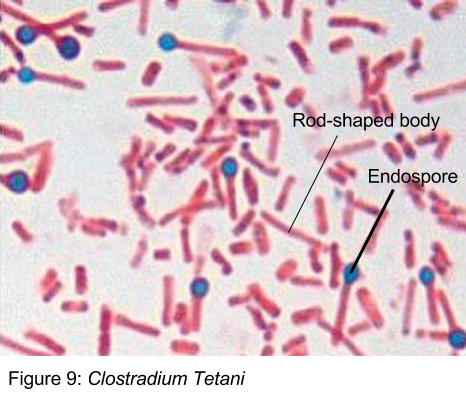
Clostridium tetani is a species of anaerobic bacteria. It is pathogenic which means it causes diseases. Clostridium tetani also causes Tetanus, otherwise known as Lockjaw [48]. Tetanus is inherited by soil or dung with the Bacteria getting into the skin and blood through a break in the skin. This can lead to terrible muscle spasm that can sometimes be fatal. In the United States Tetanus is extremely uncommon with only 30 reported cases in 2016 [49]. Tetanus is also unique in that it can not be passed from person to person and must be inherited from something else. It can also be found in the intestines of animals. The Bacteria has a drum stick like shape and is gram positive which means it dispositive on gram stain test.
YouTube video 1: Clostradium Tetani
Organism 2: Streptococcus Thermophilus (Beneficial)
Taxonomy
Domain: Bacteria
Phylum: Firmicutes
Genus: Streptococcus
Species: S. thermophilus
Why does this organism belong in this domain?
Streptococcus Thermophilus belongs in the domain Bacteria because it does not have membrane bound organelles. It also belongs because it is unicellular, prokaryotic, lacks a nervous system, and reproduces asexually. It has peptidoglycan located within its cell wall and is microscopic. Its ribosomes also have a unique structure.
General description of the organism
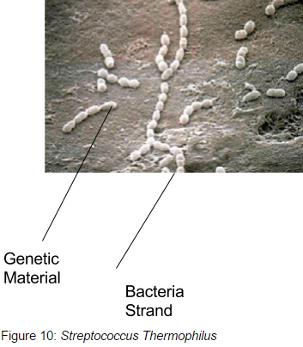
Streptococcus Thermophilus is a species of beneficial bacteria. Its main benefit is that it is used in the processing of cheese, yogurt and other dairy products by turning lactose into lactic acid. Without it dairy products would be forced to be produced in a more artificial way [51]. It is gram positive and requires oxygen but is unique in that it can survive without oxygen even if it is absent from its environment. Its best growth temperature is 35-42 degrees Celsius. It is also non motile which means it can't move on its own and does not produce spores[52].
YouTube video 2:Streptococcus Thermophilus
