Organism 1: Glittering Woodmoss (Non-vascular)
Taxonomy
Kingdom: Plantae
Division: Bryophyta
Genus: Hylocomium
Species: H. splendens
Why does it belong in this kingdom?
Glittering Woodmoss belongs in Plantae because it is a eukaryote, is multicellular, acquires nutrition through photosynthesis, and is not motile.
General description of the organism
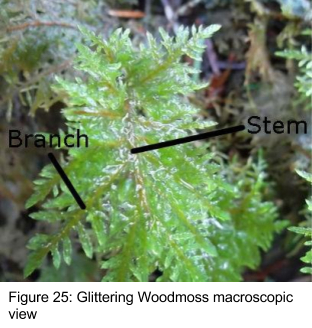
Glittering Woodmoss is a moss mainly found in the Northern Hemisphere in subarctic climates. It is most commonly found in Europe, Russia, Alaska and Canada, because of the colder climates. This plant is going to be found on the forest floor. Glittering Woodmoss is generally olive green, yellowish, or reddish in color, with reddish stems and branches. Glittering Woodmoss has multiple uses, one of them being that it is used for lining fruit and vegetable storage boxes. In the past it was utilised as a floor covering for dirt floors., and in Alaska and northern Canada it is still used for filling the gaps between the logs in log cabins. It is known for its antibacterial properties [72].
Organism 2: Ginkgo Biloba (Gymnosperm)
Taxonomy
Kingdom: Plantae
Division: Ginkgophyta
Genus: Ginkgo
Species: G. biloba
Why does it belong in this kingdom?
Ginkgo biloba belongs in Plantae because it is a eukaryote, is multicellular, acquires nutrition through photosynthesis, has no nervous system, and is not motile.
General description of the organism
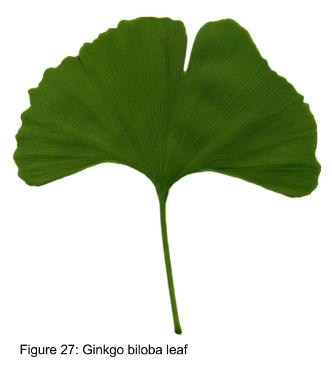
Ginkgo biloba is native to China, and has been found in fossils dating back 270 million years. Ginkgo biloba trees are very large, the lowest ones reaching 66 feet, and the tallest reaching over 160 feet. The trees are also rooted into the ground very deeply, to resist wind and snow damage. The leaves are incredibly unique, with the leaves having the appearance of a fan.
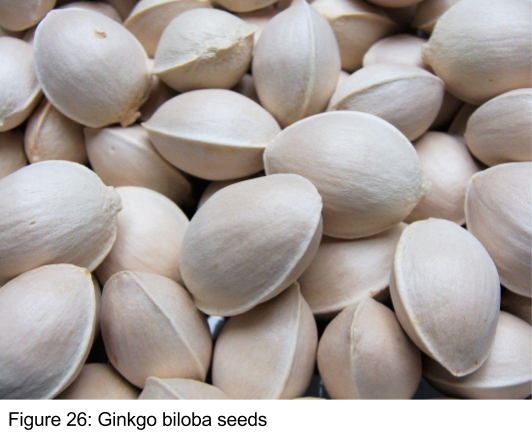
Ginkgo biloba is known for its many uses, such as in cooking and medicine. A part of ginkgo biloba is marketed in dietary supplements with the claims that it increases cognition. Ginkgo biloba has also been studied as a possible treatment for dementia and Alzheimer’s disease. With regards to cooking, a specific part of ginkgo biloba produced in the early stage of it’s development is used as a traditional Chinese dish. Japanese cooks use gingko seeds in their traditional dishes as well [73].
Youtube video #3: Ginkgo biloba
Organism 3: Bluejacket
Taxonomy
Kingdom: Plantae
Division: Commelinaceae
Genus: Tradescantia
Species: T. ohiensis
Why does it belong in this kingdom?
The bluejacket belongs in Plantae because it is a eukaryote, is multicellular, acquires nutrition through photosynthesis, has no nervous system, and is not motile.
General description of the organism
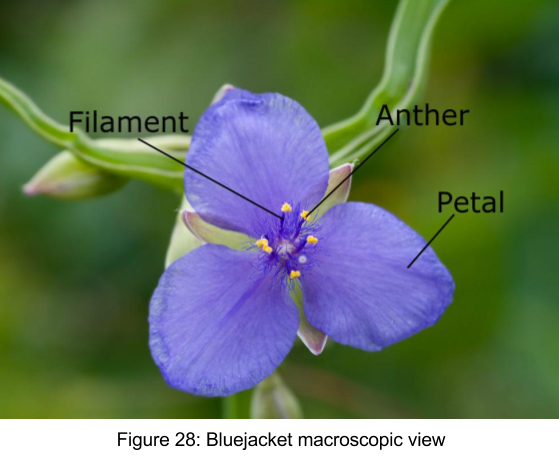
The bluejacket, otherwise known as Ohio spiderwort, is a flower native to eastern and central North America. It grows 2-3 feet tall, and is a blue color. This flower is found in prairies, wood margins, roadsides, and meadows. The bluejacket blooming period occurs from late spring to mid-summer, and lasts about one and a half months. This flower is beneficial, having a pleasant appearance [74].
YouTube video #4: Bluejacket
